Proactive
Use care plans to identify who needs steady support, when they should be checked on, and who is responsible for follow-through.
 The Fold
Churches First | Private Care Planning | Responsive Follow-Through
The Fold helps churches stay proactive with care plans, responsive through intake and care alerts, and accountable that follow-up is actually happening. The same model also fits recovery groups, community outreach teams, first-responder internal support teams, internal HR support teams, and patient-support teams that need discreet internal care coordination over time.
It is not your system of record. It works alongside the tools you already use, importing people from Planning Center or scheduled CSV feeds, mapping them in, monitoring changes over time, and creating care alerts so nobody is left behind.
In every organization that takes people seriously, care work eventually outgrows memory, scattered texts, private spreadsheets, and informal handoffs. The problem is usually not that people do not care. The problem is that follow-through is hard to sustain.
The Fold exists to help trusted internal care teams notice people, respond to concerns, and carry context forward with dignity. It gives organizations a practical way to plan care, react when something surfaces, and confirm that someone actually followed up.
Use care plans to identify who needs steady support, when they should be checked on, and who is responsible for follow-through.
Capture incoming concerns through intake and care alerts so emerging needs can be noticed quickly and routed to the right internal helper.
Track assignments, notes, and next steps so teams can see that care is happening, not just assume it is.
Bring people in from Planning Center or scheduled CSV imports over SFTP, then map fields into The Fold without replacing your existing source system.
Run imports on a schedule, monitor for new people and important changes, and keep care work current as your organization changes.
Turn changes in the source data into care alerts, assignments, and follow-up so nobody is quietly missed when visibility changes.
Records, rosters, and operational workflows may be organized, but ongoing care follow-through often stays reactive. Responsibility gets fuzzy and sensitive support work ends up fragmented.
Internal helper teams can plan care intentionally, hand off clearly, and keep support steady in a private environment designed for follow-through, not broad exposure.
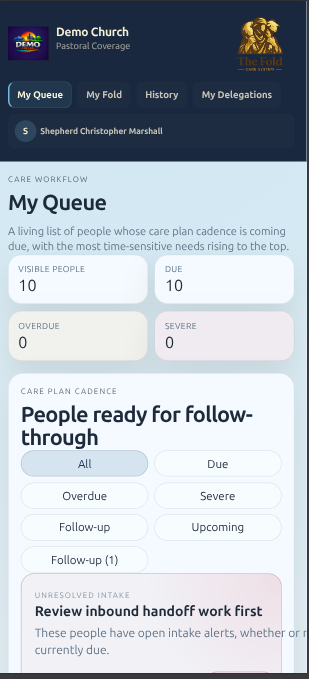
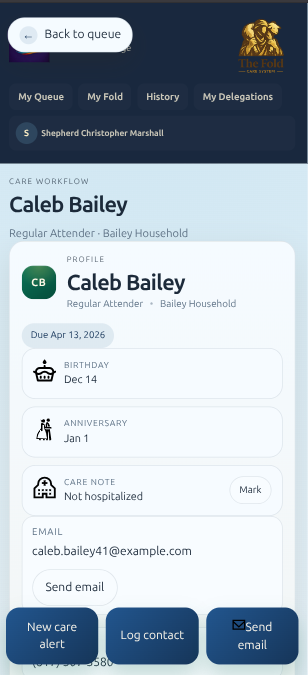
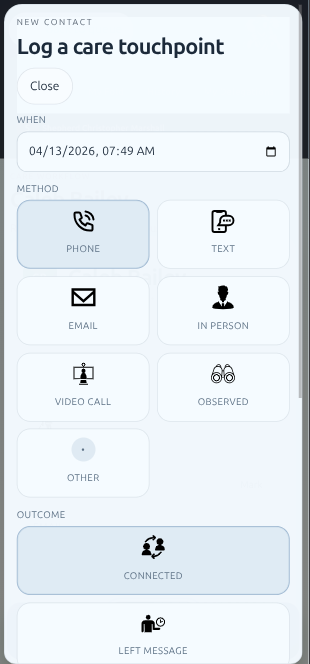
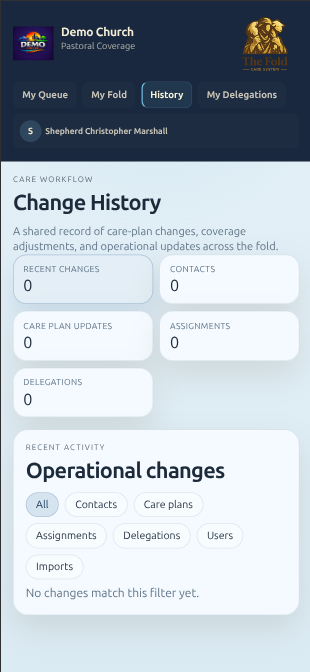
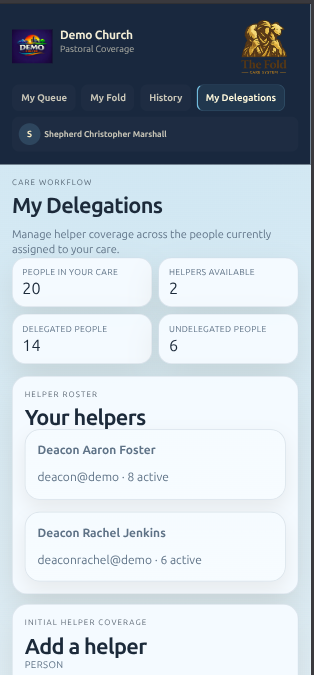
These current screenshots are from the church demo on mobile. They show the rhythm of queue visibility, person context, care logging, shared responsibility, and change tracking that makes The Fold feel different from a record-keeping system.
Equip pastors, elders, deacons, ministry leaders, and care teams to follow through consistently without turning shepherding into administration.
This is the strongest fit today: import people from Planning Center or CSV feeds, watch changes over time, assign follow-up, and create care alerts when someone needs attention.
Stay close to every recovery participant with sponsors, peer mentors, and timely follow-through.
Give chaplains, peer-support leads, and internal helpers a discreet tool for care follow-up that stays private and separate from broad operational visibility.
Coordinate community care, follow-up, and volunteer support across every active participant.
Keep people managers, HR partners, and employee check-ins aligned with steady follow-through without turning the work into a compliance system.
Keep patient support coordinated across care leads, support staff, and consistent follow-up in non-clinical internal workflows.
Import people from Planning Center, assign care responsibility, monitor changes over time, and make sure new people or drifting members are not missed.
Keep sponsors and peer mentors aligned around participant care plans, incoming concerns, and timely follow-up.
Give chaplains and peer-support leads a private workflow for intake, assignments, and steady support follow-through outside broad operational systems.
The Fold is designed for the people inside an organization who are actually responsible for support follow-through, not for broad internal audiences.
That makes it a strong fit for settings where support work should stay discreet, including church care teams, recovery groups, community outreach teams, first-responder chaplain or peer-support workflows, internal HR support teams, and patient-support teams.
The Fold is now available in v1. Request a demo and tell us a bit about your team, your current system, and the kind of care workflow you need to support.
We are especially interested in churches, recovery groups, community outreach teams, first-responder internal support teams, internal HR support teams, and patient-support teams where trusted helpers need a private tool for steady follow-through.
Today’s demo visuals are church-focused. Additional demo variants for other verticals can be added as those slices are developed further.